
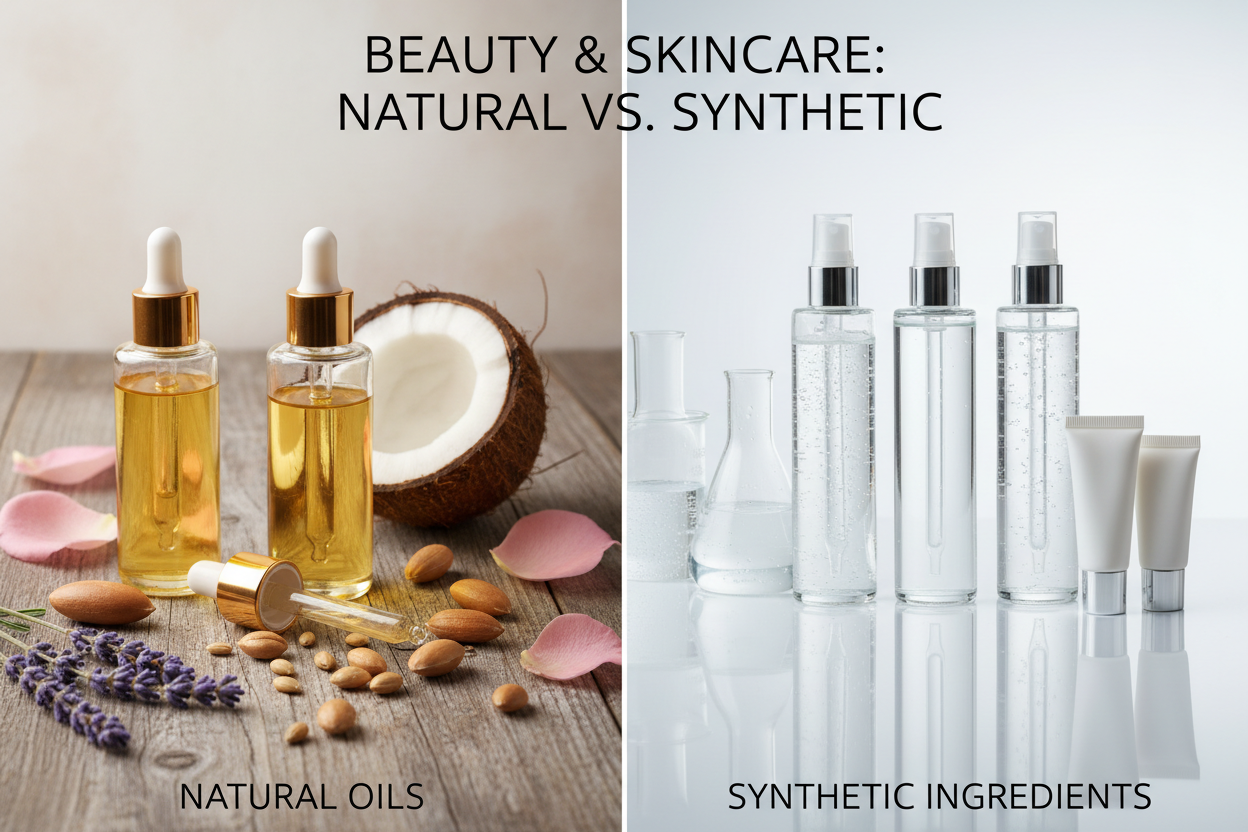
Natural oils vs. Synthetic ingredients
In skincare, few topics create as much debate as natural vs synthetic ingredients.
Some people believe natural is always safer. Others trust lab-created ingredients more. The truth? It's not black and white.
Natural oils
Natural oils are plant-derived oils that have been extracted, often cold pressed, from seeds, nuts, or fruits. Common examples are argan oil, jojoba oil, and rosehip oil. These oils have been used for centuries in traditional skincare for a reason.
High-quality natural oils are rich in essential fatty acids, antioxidants, vitamins, and skin-repairing lipids. They closely mimic the skin's own lipid structure, which makes them excellent for supporting the barrier.
For example:
- Argan oil contains vitamin E and essential fatty acids that help soften, protect, and strengthen the skin.
- Jojoba oil is structurally similar to human sebum, making it balancing for both dry and oily skin.
- Rosehip oil is rich in vitamin A and antioxidants that support skin renewal and brightness.
The benefits of natural oils is that it supports barrier repair, reduces moisture loss, improves skin softness, provides antioxidant protection, and requires minimal processing when high-quality.
For dry, compromised, or barrier-damaged skin, natural oils can be incredibly nourishing.
However, ''natural'' does not automatically mean non-irritating. Some plant oils and extracts can trigger sensitivity depending on formulation and skin type. Quality and sourcing matters.
Synthetic ingredients
The word ''synthetic'' often sounds intimidating. But synthetic does not mean harmful. Many synthetic ingredients are created in laboratories to increase stability, improve safety, ensure consistent results, and target specific skin concerns. In fact, some synthetic ingredients are designed to mimic naturally occurring substances in the skin.
Examples include:
- Lab-stable peptides
- Ceramides
- Hyaluronic acid
- Certain forms of vitamin C
Well-formulated synthetics are extensively tested, more stable than some natural compounds, less likely to degrade quickly, and are designed for precision and performance.
For example, peptides are engineered to signal collagen production. Ceramides help restore the skin barrier. These are difficult to extract directly from nature in stable, usable forms.
So what is actually better? The real answer: it depends.
Your ideal routine depends on your skin type, your sensitivity level, your skin goals, and the overall formulation quality.
A poorly formulated natural product can irritate the skin. A poorly formulated synthetic product can also cause issues.
It's not about ''natural vs. lab''. It's about safety, stability, and transparency.
The formulation
Skincare products are ecosystems. Ingredients do not work in isolation. A formula must consider:
- Ingredient compatibility
- Concentration levels
- pH balance
- Preservation systems
- Oxidation prevention
For example, a natural oil rich in antioxidants can lose effectiveness if not properly stored or stabilized. A synthetic active can irritate if used at too high a concentration. Instead of asking, ''Is this natural or synthetic?'' ask:
- Is this ingredient safe at this concentration?
- Is the brand transparent about sourcing and formulation?
- Does it prioritize long-term skin health?
At Manalsbeauté, we believe skincare should feel clean, effective, and trustworthy. We value formulations that are safe, transparent, stable, and purpose-driven. Every ingredient has a reason to be there. Nothing is added for trends. Nothing is added just to sound impressive on a label.
We carefully select ingredients that support your skin barrier, protect against environmental stress, and work in harmony with your body, not against it. We study. We research. We refine.
As we grow, we will expand into more thoughtfully formulated products designed to support your skin from every angle. We're building more than just products. We're building trust. We're building a standard.
Read more
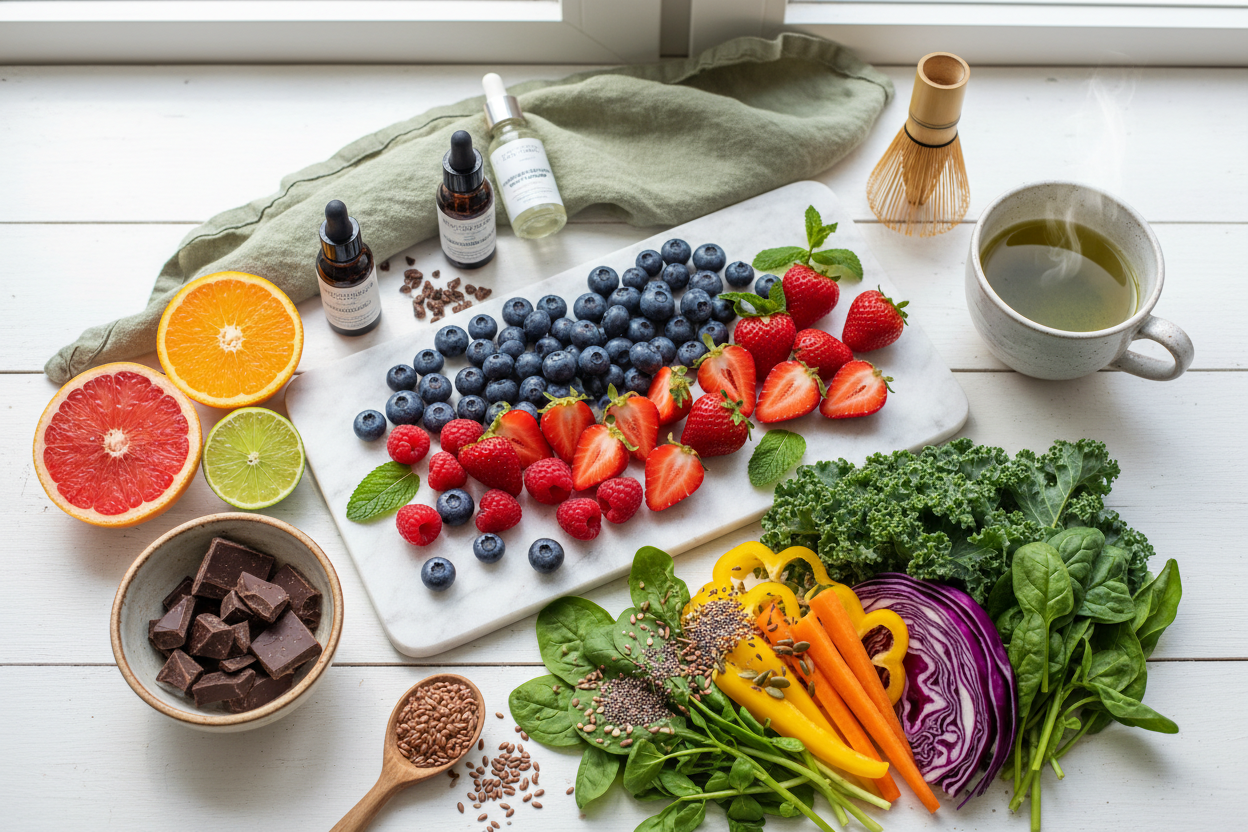
Discover how antioxidants protect your skin from free radical damage, prevent premature aging, and how to incorporate them into your routine.
Avoid the most common skincare mistakes that cause breakouts, irritation, and premature aging and learn how to avoid them.